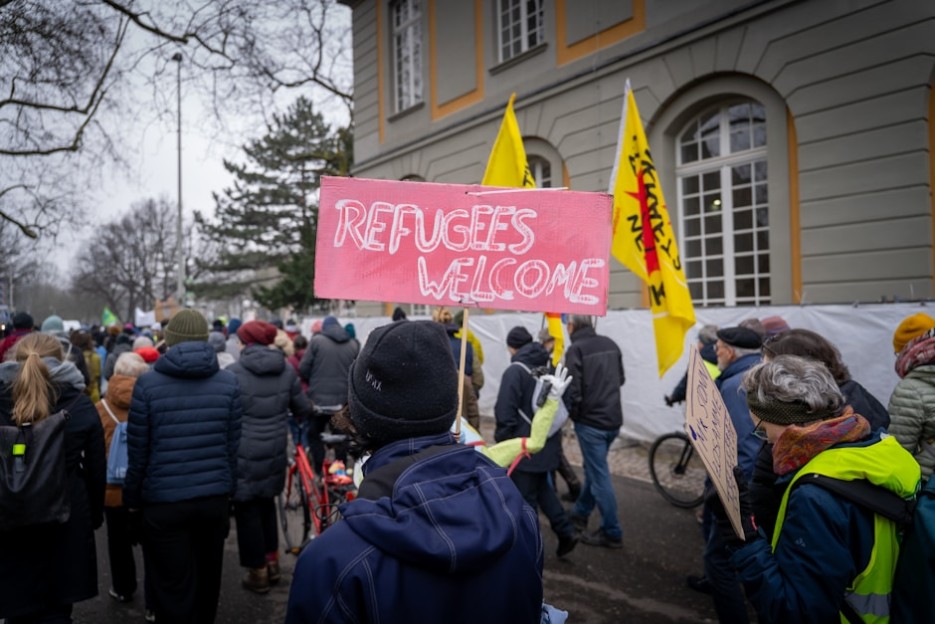
The European Commission and the High Representative have marked World Refugee Day by recognising the ongoing challenges faced by millions of forcibly displaced people around the world.
More than 122 million individuals are currently displaced due to conflict, violence, persecution or human rights abuses. The EU has described this as an unprecedented level of global displacement and has reaffirmed its commitment to supporting those affected.
The EU continues to assist refugees from various crises, including people fleeing the conflict in Syria and over 4.3 million Ukrainians who have been granted Temporary Protection following Russia’s invasion. Officials noted that Europe remains a place of safety for many in need.
At a global level, the EU remains one of the largest donors to humanitarian causes. It supports responses to emergencies such as those in Sudan and the Middle East, with a focus on ensuring access to essential services and durable solutions for displaced communities. These include voluntary return, local integration and resettlement.
International cooperation, the Commission said, is essential to upholding refugee rights. Continued support for agencies such as the UN Refugee Agency (UNHCR) and the UN Relief and Works Agency (UNRWA) was described as critical.
The EU said it will continue to uphold its international obligations and work to protect the rights of refugees under both EU and international law.
Background on EU actions
Since 2015, EU resettlement schemes have helped more than 134,000 vulnerable refugees. Humanitarian admission programmes have provided additional support, welcoming nearly 53,000 people since 2021, primarily Afghans at risk. Member states have pledged a further 61,000 resettlement and humanitarian admissions for 2024 and 2025.
Following agreement on the Pact on Migration and Asylum in 2024, work is underway to implement the legislation by mid-2026. The new framework aims to manage migration through a comprehensive approach, combining law-making with operational efforts across the EU.
The Commission is working with member states to develop the legal and practical infrastructure needed to apply the new rules. This includes further investment and partnerships with countries outside the EU as part of its broader strategy.